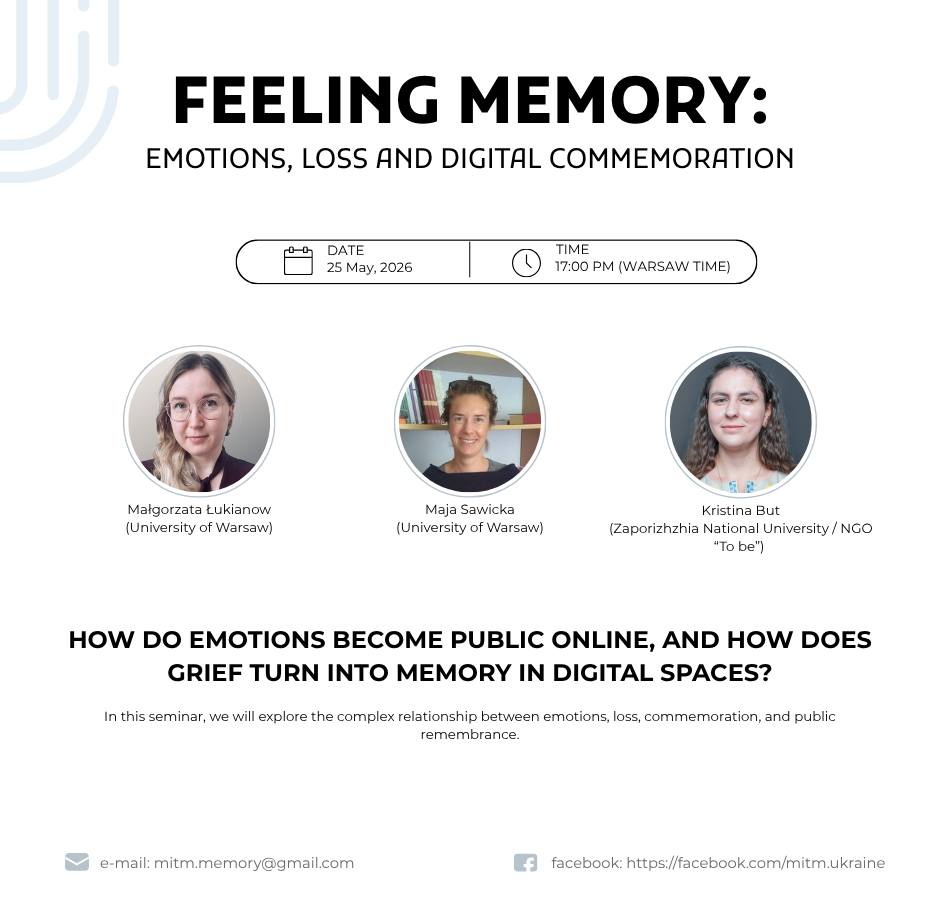
On May 25, the “Memory in the Making” team conducted the seminar “Feeling Memory: Emotions, Loss and Digital Commemoration”. The…

Research about Early Grassroots Commemorations and Digital Activism in Wartime Ukraine
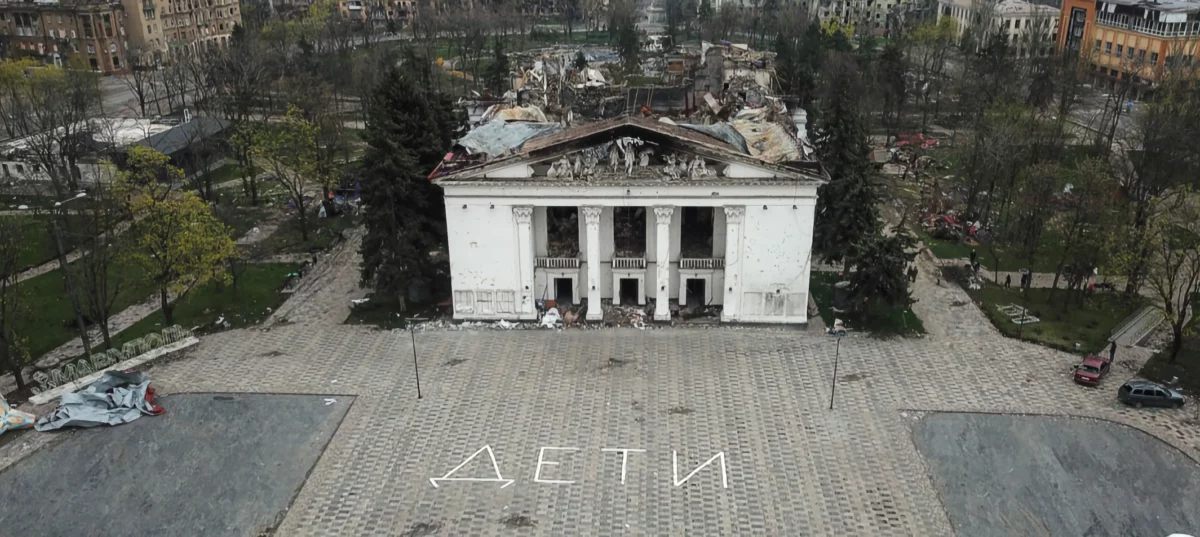
This research project explores grassroots war memory practices in Ukraine following the full-scale Russian invasion in 2022. The study focuses on spontaneous memorial initiatives and digital forms of remembrance, analyzing how offline memorials and social media content shape collective memory. By examining these commemorative practices, the research team identifies how local communities honor victims and build civic resilience amidst the ongoing conflict. The scope of the research covers the period from the initial days of the invasion to the third anniversary of the war, with a specific focus on the events in Bucha and Irpin. This project is funded by the Foundation for Polish Science (FNP) under the "For Ukraine" program. It is a collaborative initiative between Zaporizhzhia National University (Faculty of Journalism) and the University of Warsaw (Faculty of Sociology).

University of Warsaw (Faculty of Sociology), Principal Investigator (Polish Team)
PhD in Sociology, specializes in memory studies, cultural sociology, and research on social change. She is currently affiliated with the University of Warsaw.
Read more
Zaporizhzhia National University (Faculty of Journalism), Principal Investigator (Ukrainian Team)
PhD in Journalism and M.A. in Psychology. She is a Junior Research Fellow at the Faculty of Journalism, Zaporizhzhia National University.
Read more
On May 25, the “Memory in the Making” team conducted the seminar “Feeling Memory: Emotions, Loss and Digital Commemoration”. The…
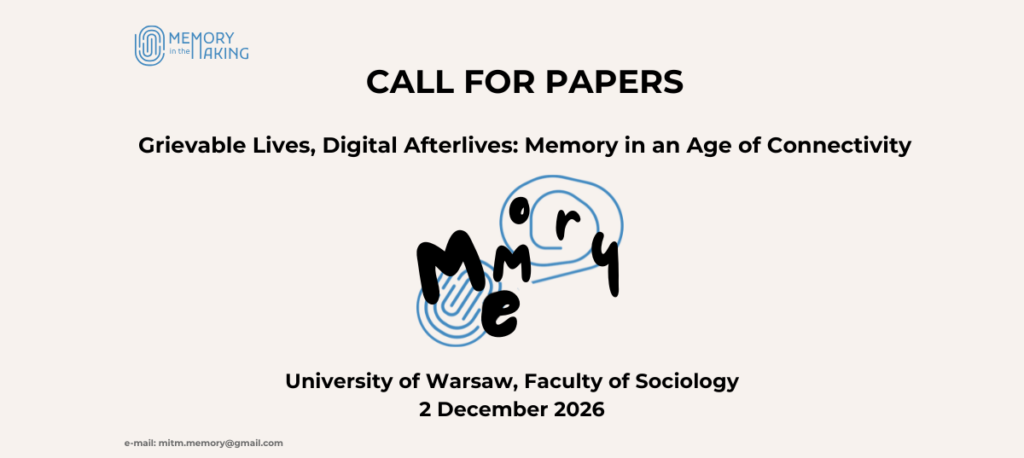
The Faculty of Sociology at the University of Warsaw invites submissions for the international conference Grievable Lives, Digital Afterlives: Memory…
Registration required March 16 5:00 PM (Warsaw time) Under what cultural, technological, and institutional conditions do immediate narratives translate into…
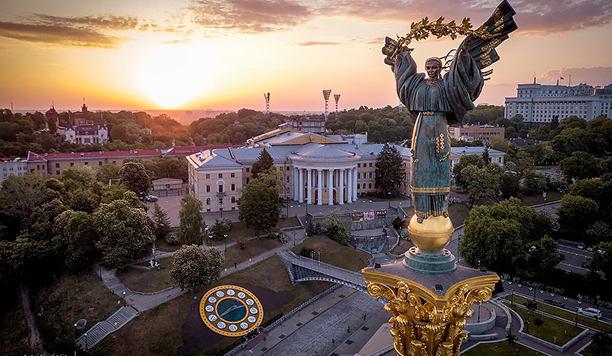
Today, our hearts beat in solidarity with all those who have lost someone or something in this brutal war. We…
It is Ukrainian-Polish research project “Memory in the Making: Early Grassroots Commemorations and Digital Activism in Wartime Ukraine”. The project addresses the urgent and evolving field of memory studies in the context of the 2022 Russian invasion of Ukraine, focusing on grassroots commemorative practices and their role in decolonisation and civic resilience.
This study aims to examine how memory cultures emerge at the grassroots level, focusing specifically on the initial commemorative actions-both online and offline-that arose shortly after Russia’s full-scale invasion of Ukraine in February 2022. It seeks to analyze how these locally driven, private initiatives, rather than state or official actors, contributed to the creation of monuments and memorial practices that commemorate the most recent events of the conflict. Academically, project seeks to theorize the interplay between memory activism and emergent forms of digital participation in conflict zones By integrating initiatives that view grassroots, vernacular actions as a form of anti-war activism with academic research on extreme violence in the 20th and 21st centuries, this project aims to foster a broader dialogue that contributes to the development of the contemporary field of digital memory studies.
The project addresses the urgent and evolving field of memory studies in the context of the 2022 Russian invasion of Ukraine, focusing on grassroots commemorative practices and their role in decolonization and civic resilience.
The research is structured around 10 case studies (seven from Ukraine and three from the Ukrainian diaspora in Poland). For each case, the team will combine digital ethnography on platforms such as Telegram and Instagram, on-site ethnographic fieldwork (if security conditions allow), discourse analysis of commemorative praxis, and semi-structured interviews with memory activists, artists, and community stakeholders.
In the context of the ongoing full-scale invasion, understanding the culture of memory in Ukraine becomes not only an academic but also a societal concern. A key aim is to move beyond usual, often conflict-centered Polish-Ukrainian memory frameworks by creating platforms through seminars, an interactive website, and public workshops that ignite new discussions around memory cultures in contemporary Ukraine. Public discussions around commemorative practices in Ukraine are far from homogeneous; they reflect a wide spectrum of regional, political, and generational experiences, often shaped by local contexts and grassroots activism. By highlighting diverse and previously marginalized commemorative threads, the project seeks to broaden public understanding and foster more inclusive, dialogic approaches to memory in both countries. In doing so, it positions memory activism not only as a response to trauma and conflict, but as a vital space for civic society. By focusing on publicity, including journalistic publications in the Ukrainian national/regional media, student workshops, website and online map, available to a wider public, particularly in Poland, the project aims to foster greater mutual understanding between Poles and Ukrainians through sharing the lived experiences of those affected by the Russian invasion. Importantly, this initiative is also designed to empower individuals who seek to regain control over their lives due to Russian aggression. In doing so, we recognize the value of civic activism and the importance of articulating and processing difficult experiences.
You can visit our Facebook: https://www.facebook.com/mitm.ukraine